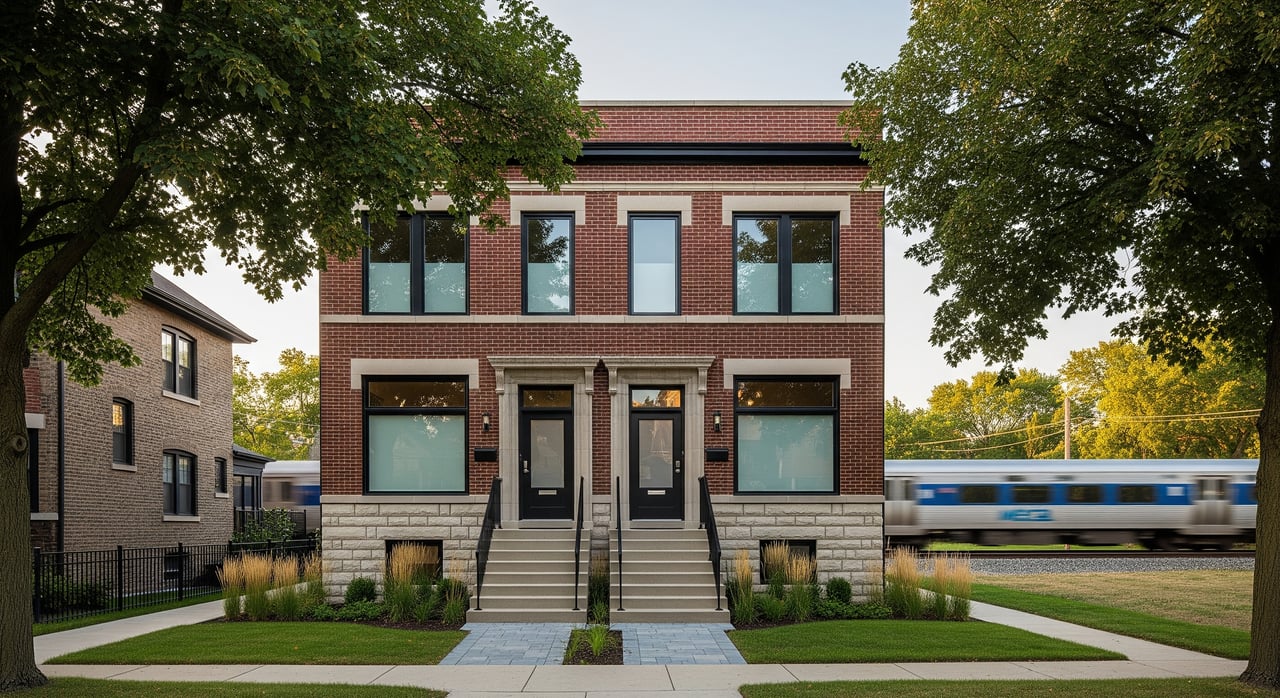
What if your commute and your rental income were a short walk apart? If you want to live close to the Villa Park Metra station and have a tenant help cover the mortgage, house hacking can be a practical path. You get convenience, while your property works harder for you. In this guide, you’ll learn smart house-hacking options near UP–West Line service, how to run the numbers, what to verify with the Village of Villa Park, and steps to get started with confidence. Let’s dive in.
Why Metra access matters
Living near the Villa Park Metra station puts you on the Union Pacific West Line with direct service to Chicago’s Ogilvie Transportation Center. That commuter access attracts renters who want predictable transit and lower-cost suburban living. Units within about a quarter to a half mile of the station often see stronger demand and shorter vacancies compared to similar homes farther away. Your tenant pool can include young professionals, grad students, and commuters who value walkable, near-transit living.
House-hack options in Villa Park
Duplex or two-flat
A duplex is the classic house hack. You live in one unit and rent the other. Look for separate entrances, two kitchens, and ideally separate utilities. Many owner-occupant mortgages allow 2–4 units, but terms vary by lender, so confirm down payment and reserve requirements.
Small multifamily (3–4 units)
Three to four units can spread risk across more tenants and increase total rent. Expect more management and regulatory steps than a duplex. Financing and insurance can differ from single-family, so plan for slightly more complexity.
Single-family with a rentable suite or ADU
A lower-level in-law suite, finished attic, or a detached structure can sometimes be converted into a legal rental unit. Rules are local. Some older suburbs limited ADUs, while others allow them with permits or a conditional process. Verify whether Villa Park allows ADUs or accessory apartments at the address you are considering.
Renting rooms in a single-family
Room-by-room rentals can be a lower-cost entry point. You may see higher turnover and more management. Check occupancy limits and parking requirements before you advertise rooms.
Short-term rentals
Short-term rentals can bring higher gross rent but are often tightly regulated. Licensing, taxes, and inspections may apply. Many suburbs limit short-term rentals in residential zones, so check local ordinances first.
Features to prioritize near the station
- Separate unit access, locks, and ideally separate meters for gas and electric.
- A layout that supports privacy, with adequate bedrooms, bathrooms, and laundry.
- Off-street parking or clear street parking rules for tenants near transit.
- Solid major systems: roof, HVAC, electrical, and plumbing in good working order.
- Realistic rent comps for similar units within walking distance to Metra.
- Walkability to shops and services that commuters value.
How to run the numbers
Understanding the math helps you compare properties and avoid surprises.
Key terms to know
- Gross rent: Total monthly or yearly rent you collect.
- Operating expenses: Taxes, insurance, utilities you pay, maintenance, management, vacancy allowance, HOA if any, and reserves.
- Net operating income (NOI): Gross rent minus operating expenses, before the mortgage.
- Cash flow: NOI minus your principal and interest payments.
- Cap rate: NOI divided by purchase price.
- Cash-on-cash return: Annual pre-tax cash flow divided by your cash invested.
- Gross rent multiplier (GRM): Purchase price divided by gross annual rent.
House-hack ROI worksheet
| Input fields | Your numbers |
|---|---|
| Purchase price | |
| Down payment ($) and % | |
| Loan amount | |
| Interest rate and term | |
| Estimated monthly mortgage (P&I) | |
| Annual property tax | |
| Annual insurance | |
| HOA dues (annual) | |
| Monthly utilities owner pays | |
| Monthly maintenance/reserves | |
| Vacancy rate assumption (%) | |
| Property management fee (% of rent, if used) | |
| Monthly rent by unit (list each) | |
| One-time repair or upgrade costs |
Formulas to use
- Gross monthly rent = sum of unit rents
- Gross annual rent = gross monthly rent × 12
- Vacancy allowance = gross annual rent × vacancy %
- Effective gross income = gross annual rent − vacancy allowance
- Annual operating expenses = property tax + insurance + HOA + (monthly utilities × 12) + (maintenance × 12) + management fee
- NOI = effective gross income − annual operating expenses
- Annual debt service = monthly mortgage × 12
- Annual cash flow = NOI − annual debt service
- Cash invested = down payment + closing costs + one-time repairs
- Cash-on-cash = (annual cash flow ÷ cash invested) × 100%
- Cap rate = (NOI ÷ purchase price) × 100%
- GRM = purchase price ÷ gross annual rent
Pro tips for assumptions
- Use a vacancy allowance of about 5 to 10 percent near transit unless your verified local data supports another figure.
- Budget 5 to 10 percent of rent for maintenance and reserves.
- Be conservative on rents. Use comparable rentals near the Villa Park Metra and adjust for utilities and parking.
Due diligence in Villa Park
Zoning and allowed uses
Confirm the property’s zoning with the Village of Villa Park. Ask whether a two-family or 3–4 unit use is permitted at the address or if a conditional use is needed. If you are considering an ADU or a basement apartment, ask about rules, permits, and any owner-occupancy requirements. Also check lot size, setbacks, and parking requirements that could affect feasibility.
Permits, inspections, and licensing
Ask Building and Zoning and the Village Clerk about rental registration or licensing. Some towns require periodic inspections and a certificate of occupancy for each rental unit. For any conversion work, identify required permits for kitchens, egress windows, separate entrances, and added plumbing or electrical. Request inspection checklists so you can plan smoke and CO detectors, handrails, and egress before you start.
Leasing and legal basics
Follow federal fair housing protections and required lead-based paint disclosures for homes built before 1978. Illinois has rules for security deposits, notices, and disclosures. A local attorney or property manager can confirm current state and local requirements. Keep your screening consistent and document your criteria across all applicants.
Taxes and insurance
Rental income is taxable. A CPA can help you plan deductions like depreciation and clarify repairs versus improvements. Shop for owner-occupied landlord coverage that fits 2–4 units and accounts for liability and short-term vacancies. If you change use, the assessor may update valuation. Review DuPage County records and the appeals process.
Utilities and existing leases
If units share meters, decide who pays which utilities and reflect that in rent and lease terms. If tenants are in place, review all leases, deposits, and renewal dates before closing. Confirm whether existing use is conforming or a legal nonconforming use and whether it can continue.
Search and leasing tips
- Target duplexes, small multifamily, or single-family homes with a legal second unit or clear conversion path.
- Aim within about 0.25 to 0.5 miles of the Villa Park Metra station to tap the commuter demand premium.
- Check parking availability, especially for multi-unit properties near the station.
- Inspect major systems early. Roof, HVAC, plumbing, and electrical issues can wipe out cash flow.
- Use professional, Illinois-compliant lease forms with all required disclosures. Complete move-in checklists and condition reports.
- Keep policies clear for utilities, parking, laundry, and common areas. Consider requiring renter’s insurance.
Financing paths to explore
- Owner-occupant loans for 2–4 units are common across many lenders. Down payments and reserve needs vary.
- FHA loans can be used for owner-occupied 2–4 unit properties. Confirm current rules with a lender.
- Conventional loans for 2-units may offer competitive terms for qualified buyers.
- Portfolio loans from local banks or credit unions can be flexible for small multifamily or ADU work.
- Renovation financing can help fund code-compliant conversions that create a legal rental unit.
Getting started near Villa Park Metra
- Define your target: duplex, 3–4 unit, or single-family with a legal second unit.
- Map a walkable search radius around the station. Focus on 0.25 to 0.5 miles.
- Call the Village of Villa Park to confirm zoning and rental licensing for each address you like.
- Get preapproved and learn your loan options for 2–4 units or renovations.
- Tour properties with a focus on separate entrances, utilities, egress, and parking.
- Run the ROI worksheet with conservative assumptions and include repair reserves.
- Plan rent-ready improvements that meet safety and inspection standards.
- Prepare leasing documents and screening criteria that comply with fair housing and Illinois law.
Ready to house hack near the Villa Park Metra with a local expert by your side? Reach out to Tim Schiller and The Schiller Team for confident guidance, on-the-ground insights, and access to the best opportunities in DuPage County.
FAQs
Can you live in one unit and rent another in Villa Park?
- Often yes, if the property is zoned for two-family or the unit is a permitted use; confirm zoning and any permits with the Village of Villa Park before you buy.
Does proximity to the Villa Park Metra station affect rental demand?
- Yes, homes within about 0.25 to 0.5 miles of the station typically see stronger demand and shorter vacancy periods among commuting renters.
How do you estimate rent for a duplex near the station?
- Compare recent rentals for similar size and condition within walking distance, then adjust for utilities, parking, and amenities to arrive at a conservative figure.
Do you need a rental license or inspection in Villa Park?
- Possibly, since many suburbs require rental registration and periodic inspections; confirm current rules with Building and Zoning and the Village Clerk.
How can you finance a 2–4 unit purchase you will occupy?
- Explore owner-occupant options like FHA and conventional loans, and consider portfolio or renovation loans if you need flexibility or plan a legal conversion.
What are the main risks of house hacking near Metra?
- Zoning or permit surprises, hidden repair costs, tenant turnover, and underestimating reserves for vacancies or major systems are the most common risks to plan for.